
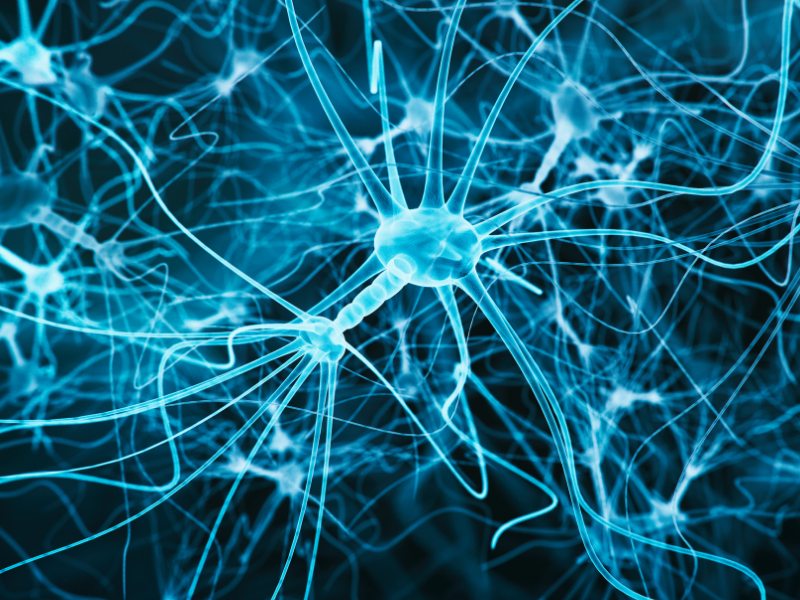
We often think of the brain as the control centre of the body. But did you know that your digestive system has its own extensive nervous system?
It’s called the enteric nervous system, or ENS, and it plays a major role in controlling what happens inside your digestive tract.
Understanding the enteric nervous system can also help us understand why the gut and brain are so closely connected — and why approaches such as Gut-Directed Hypnotherapy can be particularly interesting when we’re talking about conditions such as IBS.
What Is the Enteric Nervous System?
The enteric nervous system is a vast network of neurons and supporting cells embedded within the walls of your gastrointestinal tract.
It stretches throughout much of the digestive system, from the oesophagus down through the stomach and intestines.
You may have heard the gut referred to as our “second brain”. The ENS is largely where that nickname comes from.
It contains hundreds of millions of nerve cells and is capable of coordinating many digestive processes without needing your conscious brain to tell it what to do.
You don’t have to think:
“Okay stomach, start digesting my lunch now.”
Thankfully, your digestive nervous system takes care of much of this automatically.
What Does the Enteric Nervous System Actually Do?
The ENS is constantly monitoring what’s happening inside your digestive tract.
It helps coordinate:
- Gut motility — the muscular contractions that move food through the digestive tract
- Digestive secretions involved in breaking down food
- Blood flow within the digestive system
- Movement of fluid and electrolytes
- Communication between different areas of the digestive tract
- Signals travelling from the gut towards the brain
It receives information about what’s happening inside the gut and helps determine the appropriate digestive response.
In other words, your digestive system isn’t simply a tube that food passes through.
It is an incredibly sophisticated sensory and nervous-system environment.
The Gut and Brain Are Constantly Talking
Although the enteric nervous system can perform many functions independently, it doesn’t operate in isolation.
It communicates continuously with the central nervous system — your brain and spinal cord — through the gut–brain axis.
One of the important communication pathways involved is the vagus nerve, but communication also occurs through hormonal, immune and metabolic pathways.
And importantly, this communication travels both ways.
The brain influences the gut.
And the gut influences the brain.
You’ve probably experienced this without even realising it.
Think about getting butterflies before an important event, suddenly needing the toilet when you’re nervous, or completely losing your appetite during a stressful situation.
These are everyday examples of the relationship between the nervous system and digestion.
What Happens With IBS?
IBS is now recognised as a disorder of gut–brain interaction.
In some people with IBS, the communication between the digestive system and brain can become more sensitive or dysregulated.
Signals that would normally be interpreted as ordinary digestive sensations may begin to feel uncomfortable, painful or urgent.
This increased sensitivity is often called visceral hypersensitivity.
Imagine the gut–brain system has a volume control.
For most people, normal digestive activity might be playing quietly in the background.
With IBS, that volume can become turned up.
Gas, intestinal movement or stretching of the bowel may suddenly feel much more noticeable.
And when the nervous system begins anticipating these sensations, it can create an ongoing feedback loop between the gut and brain.
Can We Help the Nervous System “Stand Down”?
When I talk about helping the enteric nervous system stand down, I don’t mean switching it off.
We absolutely need our ENS functioning.
What we’re talking about is helping a gut–brain system that has become overly sensitive or vigilant move towards a calmer and more regulated response.
This is one of the reasons I find Gut-Directed Hypnotherapy so fascinating.
Gut-Directed Hypnotherapy uses deep relaxation, focused attention, therapeutic suggestion and digestive imagery to work with the communication between the brain and gut.
Rather than simply concentrating on what is happening inside the digestive tract, we’re also considering how the nervous system is interpreting and responding to those digestive signals.
Over time and with repetition, the aim is to reduce heightened gut–brain reactivity and encourage a more comfortable pattern of communication.
Your Gut Is Much More Than a Digestive Organ
Once you understand the enteric nervous system, it becomes easier to see why digestive health isn’t always as simple as changing what we eat.
Nutrition is incredibly important, but digestion also involves the brain, nervous system, immune system, hormones, microbiome and our emotional and physical environment.
For someone living with IBS, working with the gut–brain connection can therefore provide another important piece of the puzzle.
Sometimes the question isn’t simply:
“What food is upsetting my gut?”
It may also be worth asking:
“Why has my gut become so sensitive to the signals it’s receiving?”
Understanding the enteric nervous system gives us an entirely different way of looking at the digestive system — not simply as an organ that processes food, but as an intelligent and responsive nervous system that is in constant conversation with the brain.
Leave a Reply